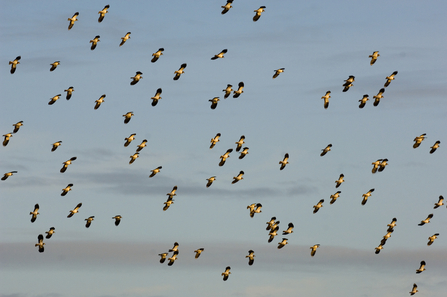

When we think of 'common' birds, such garden regulars as robins, sparrows and blackbirds may spring to mind. This winter, a new species emerged as abundant -- lining every field and pasture as far the eye can see. In fact, as I write, I can see vast swathes of huddled black-and-white shapes, hunkered down amongst the ivory remnants of winter stubble.
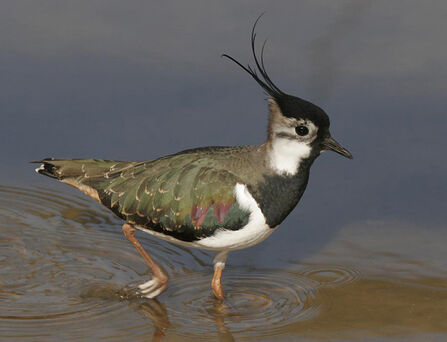
To quote my mother, these "tiny peacocks" have lately faded into the background for birders; a kind of white noise that must be sifted through to find rarer and more exciting species. So it is now my task to cast the spotlight back on the beautiful lapwing.
Cantering along the Attenborough Walk, the sky is pristinely blue. The odd cloud that does pass over is not feathery like yesterday’s, but a billowing tower, casting the pastures and reeds into softly dappled sunlight. Today the landscape is filled with the grumbling murmurs of wigeon and teal, leaving a bassy hum resounding in my ears. Their slow, repetitive movements are lethargic and somewhat mesmerising, but my attention is abruptly drawn away by a dark blur cutting through my field of vision.
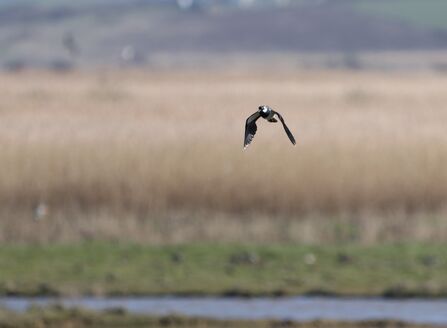
Over the grazing-marsh, a lapwing engages in its maverick songflight, twisting and contorting like some circus escape artist, but with all the elegance and grace of a ballerina. As it tumbles lower, its body flashes in a kaleidoscope of colour: gaudy purples, glossy greens, gallant blues. My heart races as it nears the ground -- its dive is unwavering and its wings dead still. Just mere inches from its demise, the primaries fan out into a great parachute, and the lapwing drifts calmly back up on the light spring currents, letting out an eerie and penetrating whistle.