Woodland birds to spot this winter

Woodland birds to spot this winter

Sparrowhawk, Paul Brackley

Discover which stunning woodland birds to spot this winter at our atmospheric nature reserves such as NWT Foxley Wood or Wayland Wood.

Our rain-soaked winter woodlands can, initially, seem rather empty. The thick moist air, stilled by the trees, absorbs and deadens sound. Patience will be rewarded, and a growing noise of ‘sirrits’ and ‘tsees’ will alert you to an approaching flock of tits. However, they quickly pass, bounding from branch to branch, there for a moment, then gone! 

Small woodland birds spend the winter together, presumably staying in a group creates better chances of finding food. The commonest are, of course, the blue tits and great tits. They are often joined by the noisy and very active (even by titmice standards) long-tailed tits. They are a little ball of feathers, with lolly-pop stick tails. A smart looking bird, they are fundamentally black and white, but with a hint of pink running through their plumage. 

A long-tailed tit sitting on a tree branch

Long-tailed tit, Dave Kilbey

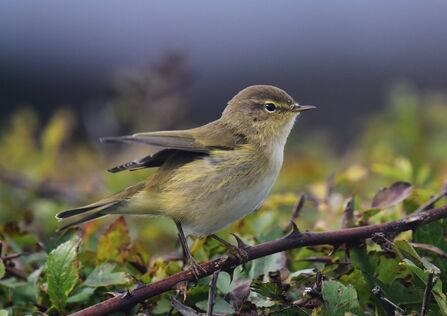
Other small birds will tag-along, with treecreepers, nuthatches and goldcrest joining the flock’s relentless search for food. Our mild winters now see chiffchaffs staying to join the fray too. If you are lucky, a firecrest may be among their number. This spectacular bird is a real treat and will light up any winter’s day. 

A firecrest hanging off a holly branch

Firecrest, Nick Appleton

Down on the woodland floor, it is always worth checking through the chaffinches for the odd brambling. During a good ‘brambling year’ a decent size beech woodland can accommodate large flocks of these handsome winter visitors. Sudden alarm calls among the small birds cautions of the presence of a sparrowhawk. Its speed and agility make it a formidable woodland hunter. 

A brambling eating from a bush of red berries

Brambling, Nick Appleton

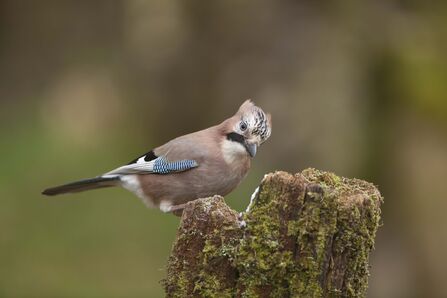
Few woodlands are without a pair of noisy jays. This woodland crow, unusually for its brethren, is a bright colourful bird. Understandably, after centuries of persecution, they can be rather shy creatures. Winter is also a great time to look for a great spotted woodpecker. A pied plumaged bird, it moves in a rather jerky fashion along bare branches and up moss-covered tree trunks. 

a great spotted woodpecker on a tree trunk

Great spotted woodpecker, Paul Brackley

Three woodland tits to look for: 

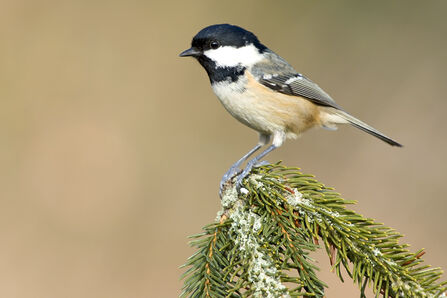
  • Coal tit
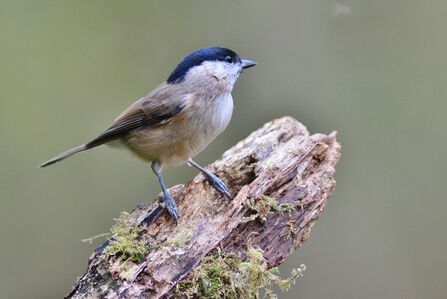
  • Marsh tit
  • Long-tailed tit 

Three random woodland birds to look for: 

  • Jay
  • Great spotted woodpecker
  • Sparrowhawk 

Three unusual woodland birds to look for: 

  • Brambling
  • Firecrest
  • Chiffchaff 

Top NWT reserves to spot woodland birds: